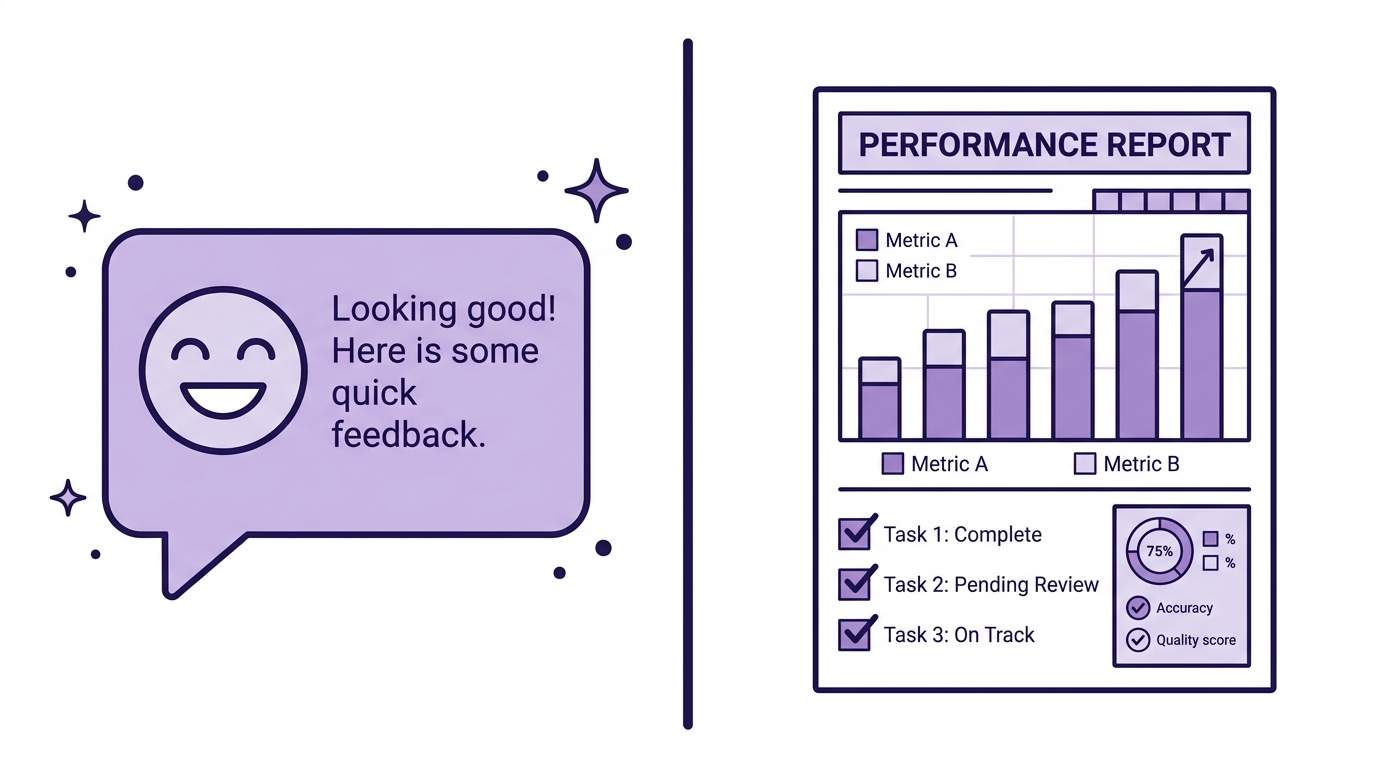
ValidatorAI and Scoutr both promise to validate your startup idea with AI — but only one tells you what to do next. The other gives you a version of validation that feels like the real thing without being it. You describe your idea to an AI, it says something like "this is an interesting concept with real potential," and you leave feeling better about it, even though nothing changed and you were just told what you wanted to hear.
ValidatorAI and Scoutr are both AI tools designed to help founders evaluate ideas. But they're solving different problems — and conflating them leads to founders thinking they've done the work when they haven't.
Want to see what a structured Scoutr report actually looks like? Run your idea through it →
What ValidatorAI Does
ValidatorAI is a chat interface. You describe your idea, it responds with feedback. The whole loop takes two minutes. The output is conversational: it'll point out obvious gaps, suggest who the user might be, name a few potential competitors.
It's genuinely useful for one specific moment: early exploration, when you have a half-formed idea and want a first reaction before investing more time. Think of it as a thinking partner, not an analyst.
The limitation is baked into how it works. ValidatorAI generates responses based on patterns in its training data. It has no access to current search demand, no view into what people are actually saying in relevant communities right now, and no way to tell you whether anyone is paying for solutions to this problem today. It's also trained to be helpful, which in practice means it trends toward encouragement — even when the honest answer is "this isn't a real problem."
ValidatorAI makes sense when you're:
- Testing whether an idea is even worth an hour of your time
- Trying to identify obvious blind spots before talking to anyone
- Generating initial questions to investigate
It's not the right tool when you need to know:
- Whether real demand exists beyond obvious guesses
- Who is already solving this and how
- Whether the people who have this problem would actually pay to solve it
What Scoutr Does
Scoutr runs a structured analysis rather than handing you feedback. Describe your idea in plain language, and Scoutr's AI stress-tests your assumptions using the six-question discovery framework built on the Mom Test and YC methodology: root cause analysis, Jobs-to-Be-Done mapping, competitive intelligence, and real demand signals pulled from Reddit and competitor data.
The free preview is ready in about 40 seconds: a fit score showing how well your solution matches a real problem, plus a sample of the demand signals found. The full report costs 100 credits, bought once in packs from $9 (250 credits) with no subscription, and covers: problem clarity, root cause analysis, target user personas, competitive intelligence with competitor MRR data, Porter's Five Forces, TAM/SAM/SOM market sizing, willingness to pay, Reddit demand signals, Mom Test questions for your specific problem space, validation experiments, and a BUILD IT / VALIDATE MORE / KILL IT verdict with explicit reasoning.
Scoutr makes sense when:
- You've decided an idea is worth serious consideration and need to know if that's actually true
- You want a structured document you can share with a co-founder, investor, or advisor
- You need to know what to do next, not just whether someone has concerns
Where it's overkill: If you're still in the phase where you have five ideas and you're trying to figure out which one to think harder about, Scoutr's depth is more than you need. Start with the quick check.
The Core Difference
| ValidatorAI | Scoutr | |
|---|---|---|
| Input | Describe your idea | Describe your idea in plain language |
| Output | AI feedback | Structured report with verdict |
| Market research | No | Yes — search demand + Reddit signals |
| Competitor analysis | Surface level | Full competitive landscape |
| Go/no-go verdict | No | Yes, with explicit reasoning |
| Validation roadmap | No | Yes — specific next steps |
| Pricing | Free + paid plans | Free preview · one-time credit packs from $9 |
The real difference is what the output is based on, not depth. ValidatorAI gives you an AI's opinion. Scoutr gives you a structured analysis built from your specific answers and real market data.
An AI opinion is a starting point. An analysis is something you can act on.
Which One Should You Use?
Use ValidatorAI if you're still figuring out which of several ideas is worth spending more time on. It's a fast filter.
Use Scoutr if you've identified an idea you're seriously considering building. That's the point where fast feedback stops being useful and structured evidence starts mattering.
Most founders don't use tools like these in sequence — they use the quick one and stop. That's the mistake. A few encouraging sentences from an AI tell you your idea sounds reasonable, which is not the same as knowing a paying market exists.
One More Thing About AI Validation Tools in General
Most tools in this category have the same problem: they're trained to be helpful, which means they're trained to find something positive to say. That's what gets positive feedback from users in the short term. It's also why they tend to fail founders in the moments that actually matter.
Scoutr is built around the opposite assumption. The discovery framework it uses is designed to surface what you don't know — not to confirm what you already believe. The verdict isn't always a green light, and that's the point. A tool that only tells you to keep going isn't validating anything.